

We are so excited to introduce you to Polly Hall, Elemental Music's new Early Childhood Music Director!
If you have little ones in Santa Monica, there's a good chance you already know Polly. Maybe you met her during her years at the Growing Place, where she served as atelierista, designing the arts experiences that filled students' days. Or maybe she's a regular voice in your house through her podcast Ear Snacks or Andrew & Polly, her GRAMMY- and Emmy-nominated children's music duo. Now she's bringing joy and exploration to Elemental Music’s youngest musicians! Read our interview to learn more about Polly, her background, how she thinks about music and early learning, and what our early childhood families can look forward to this season!
Elemental Music: What first drew you to early childhood music education?
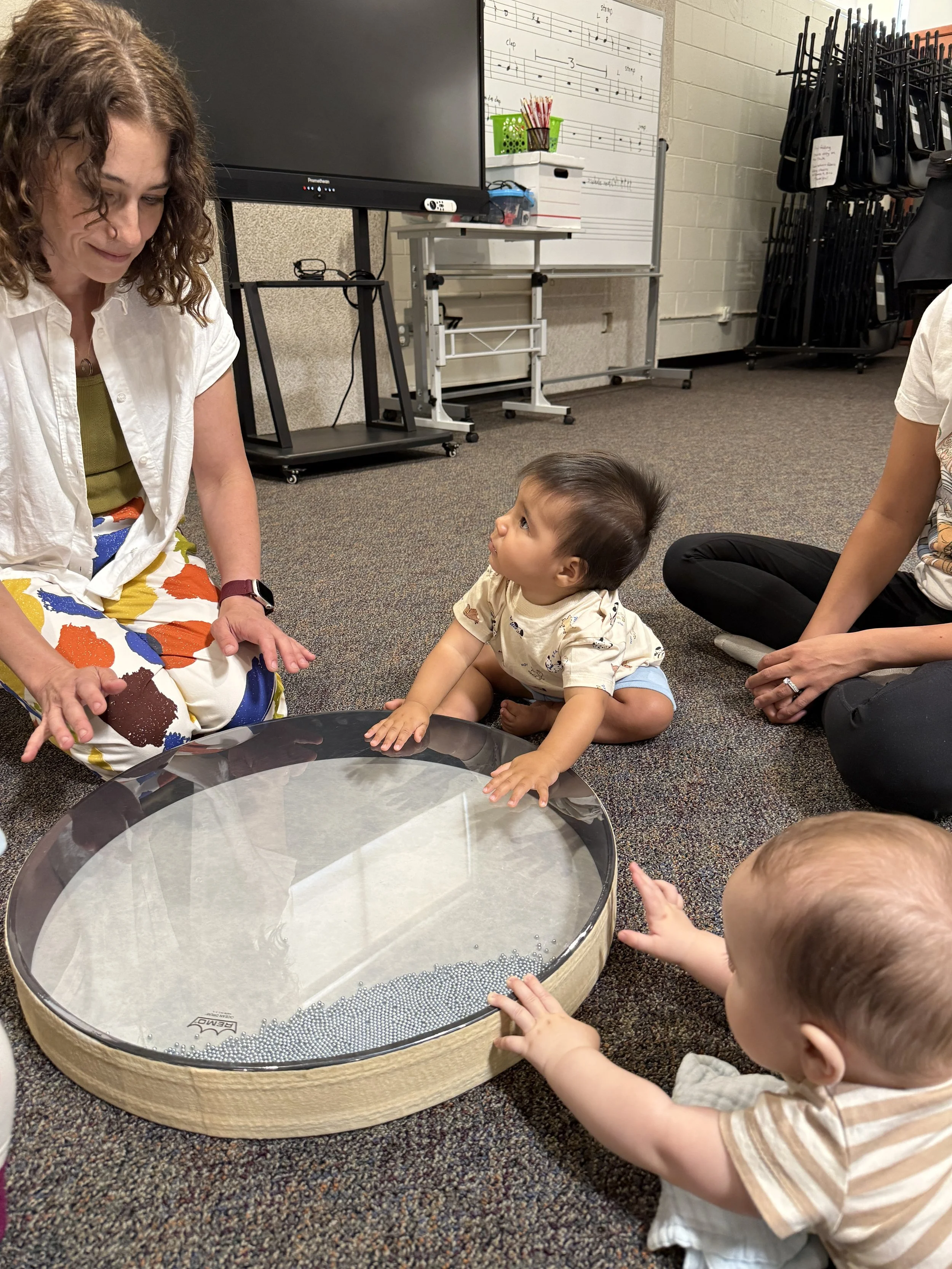
Polly Hall: I noticed how the sound of my singing seemed to affect my nieces when they were young. I found it amazing that something as simple and human as the voice could gently hold their attention. I wondered, what sensations are children experiencing when they hear music? What are they wondering about as they receive and make sounds?
EM: You started Suzuki violin at age 3, wow! What was your own path into music?
PH: When I was two and living in Louisville, Kentucky, a child in the house next door played violin. My little sister was on the way and finally when I was three, my mom agreed to take me to lessons. As a mom of three kids, I realize now how much work - and learning - it must have been for her, and how amazing it was that she opened that door for me and my sister. My whole family held that door open. My aunt bought me my first violin (which I still have!), and my parents and extended family supported every musical effort: long drives to all-state competitions, a trip to a pawn shop for my first guitar, help designing and building sound isolation panels for my studio, and cousins showing up at a dive to hear me sing at an open mic.
EM: You're GRAMMY-nominated as a producer/artist and Emmy-nominated as a songwriter. How does that professional creative world inform your work as Early Childhood Music Director?
PH: For me, experiences in the field and in the studio are interconnected; one way of working informs the other and vice versa. Questions follow me wherever I go: how does music shape us, influence how we learn, and uncover how we feel? Working with children and families lets us explore those questions through moments together; the studio lets us explore them through the creation of a different kind of art.
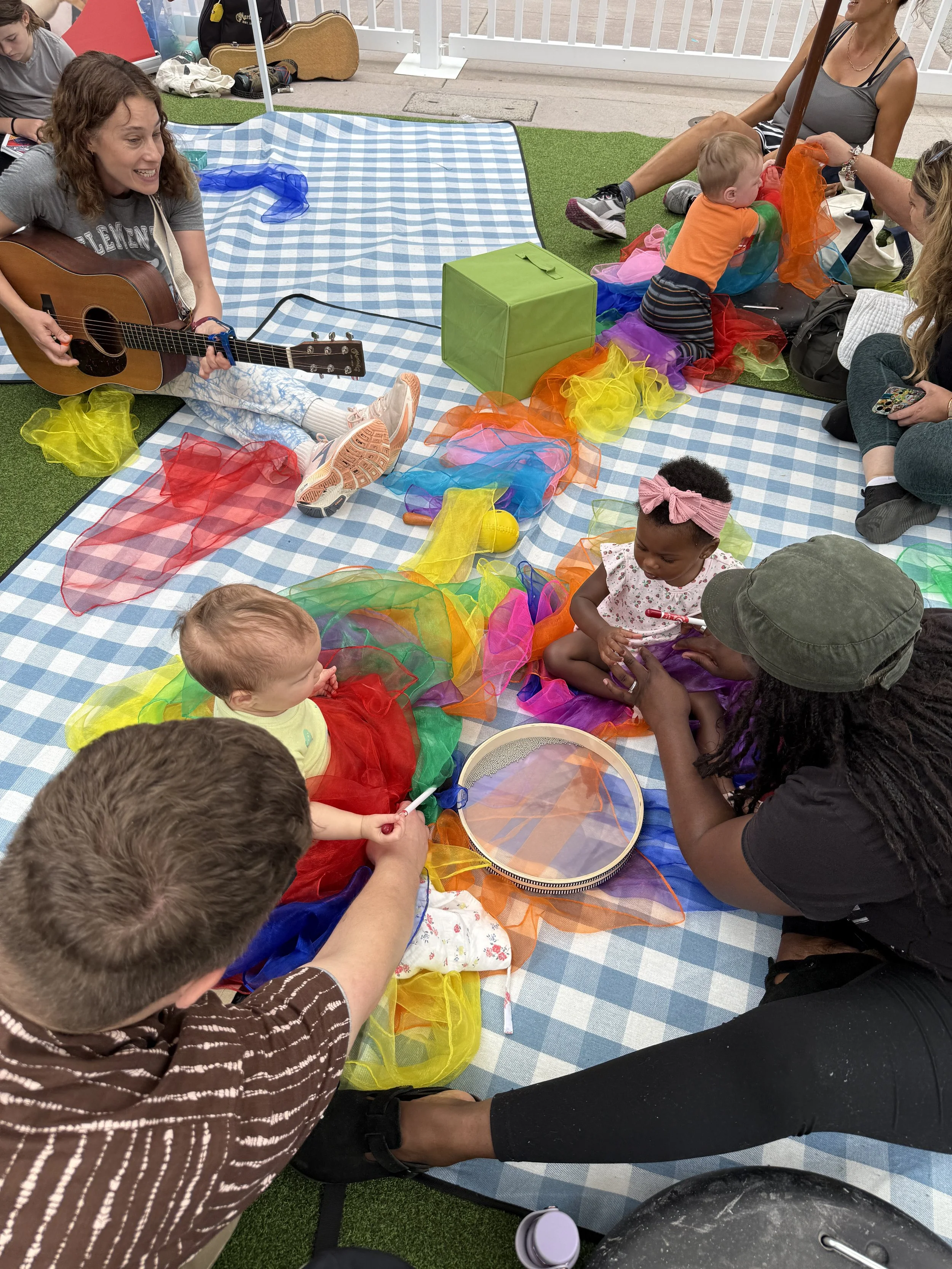
EM: You previously worked at Growing Place. How did that experience shape the way you think about music with young children?
PH: Working in a school means building trust with children as they emerge into their own identities and interests, and collaborating with teachers on how to support them. It's a great responsibility and joy. Schools like Growing Place so highly regard the child and the child’s work, and I was encouraged to focus my attention to notice how children are learning, opportunities to document how children respond and engage with musical concepts and materials, and observe those changes over time. Because of those experiences I will forever see the hard and wonderful work children and adults are doing with each and every action, choice, look.
“ I hope our program offers something special by drawing on current research in music education and early childhood development, and by helping families begin their relationship with music even earlier. ”
EM: What changes for a child or a caregiver after a few months of consistent music classes?
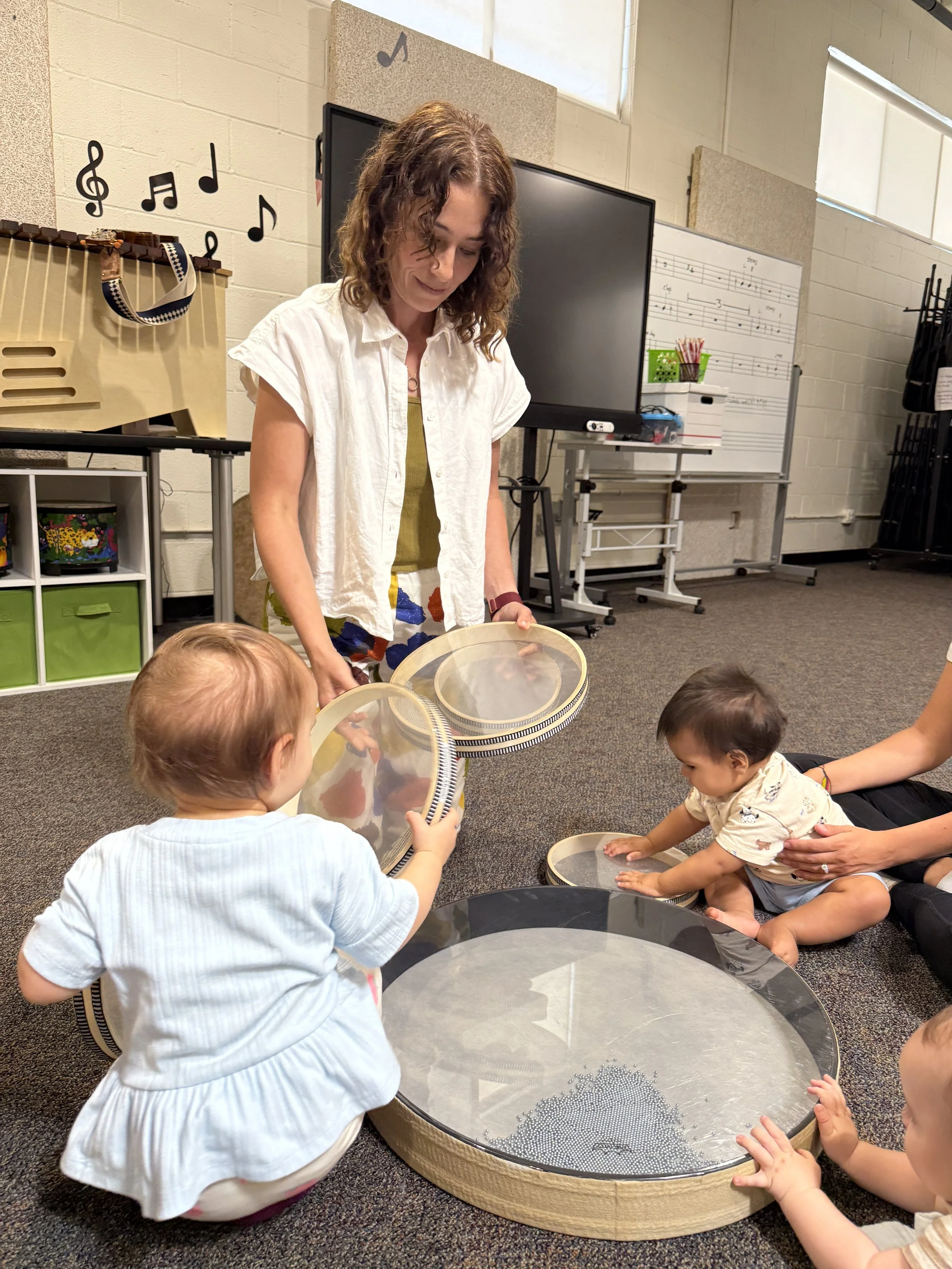
PH: Great question, because everyone in our classes is learning: the children, the parents, and me! Children need time to tinker, explore cause and effect, and arrive at intentionality. After a few months of classes and open exploration with instruments, the quality of their interactions changes - more eye contact, more intentionality, more rigorous self-imposed challenges, more turn-taking. Children’s interactions are not just with the instruments, of course, they are also interacting with each other and with the adults in the community. One of the amazing things about Elemental is this social learning model, where children are learning in community - by observing, by sharing, and complementing each other’s sounds in ensemble work including our early childhood program.
EM: What skills is early childhood music actually building in a child?
PH: So many! Music touches the entire brain at once - hearing, movement, memory, attention, emotion. It’s not just “Wheels on the Bus” - children build language and literacy skills, a sense of meter and math, executive function and higher-order thinking, collaboration, communication, listening, self-expression, and self-regulation. Through early childhood music, children bring awareness to and skill with their bodies - building important muscles in their hands that they will need for writing and instrument-playing, and building their awareness of space - and time, since music is an art that unfolds over time!
EM: What excited you about joining Elemental Music specifically?
PH: Elemental Music has an incredible history and presence in our community. I see how committed the organization is to making music education available to every child. Dr. Suzuki said that everyone can learn to play music and gain access to their creativity - I’m so thankful to be part of an organization that continues to work toward this through each and every one of its programs.
EM: What makes Elemental's early childhood program different from other options families might consider on the westside?
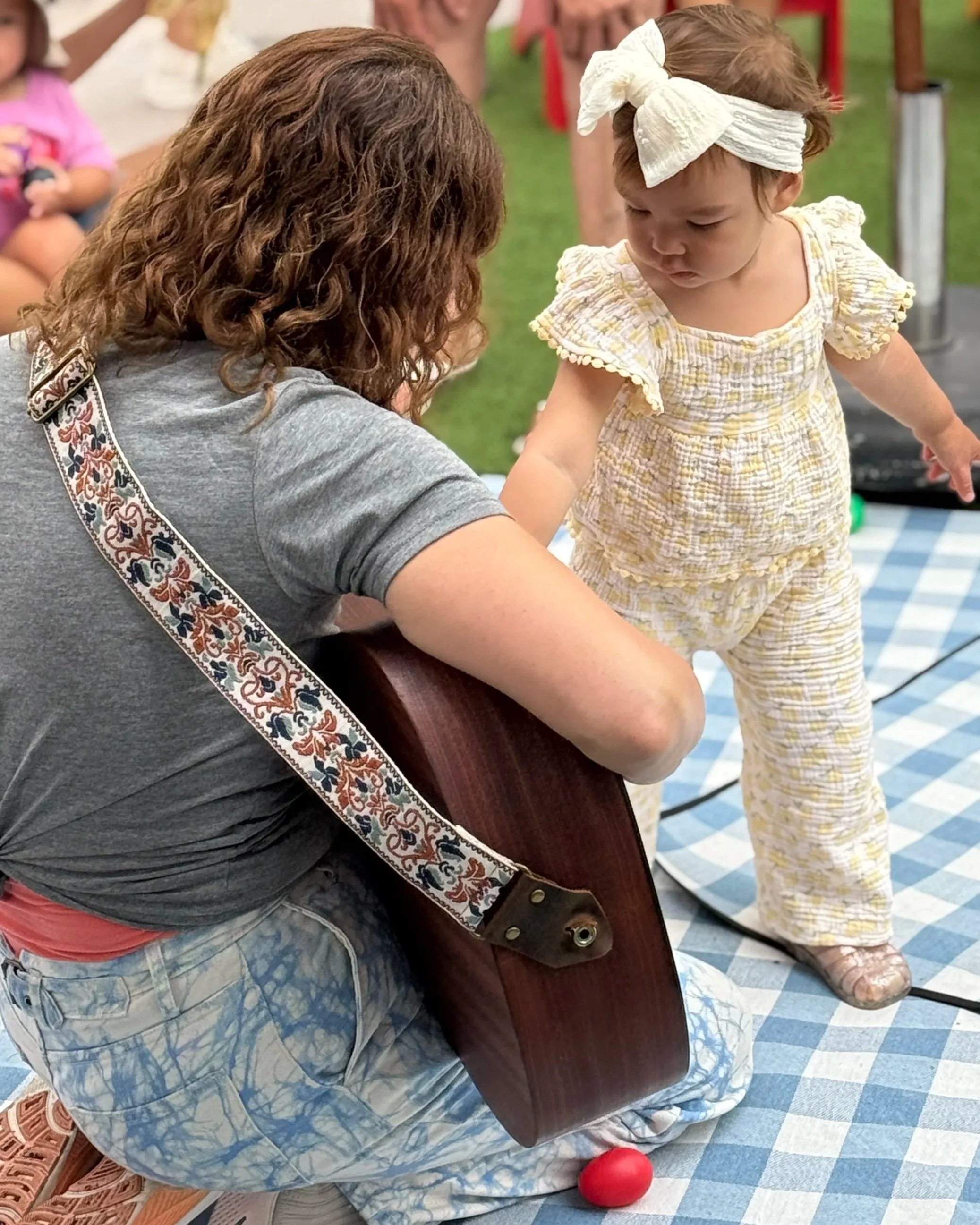
PH: There are so many amazing opportunities for children to explore music and the expressive arts here in Los Angeles. I hope our program offers something special by drawing on current research in music education and early childhood development, and by helping families begin their relationship with music even earlier. Our youngest families will also learn from our elementary, middle, and high school students, who mentor in the program each session and share their instruments and knowledge.
EM: If a parent is on the fence about starting music classes, what would you tell them?
PH: Being a parent is… so hard. And activities are a tough call. You are doing a great job, by the way! Whatever you choose for your kid, it’s going to be great. Just make the best decision you can today, and you can always try something new on another day. If no one else has said it to you lately, thanks for doing all the things you’re doing. PS - you have music inside you, too. Try humming to your child during bathtime and see how they respond!
EM: Is there anything else you'd like to add?
PH: I can’t wait to meet more of our community and hear about the way your family experiences music! Maybe it’s rhythm, maybe it’s melody, maybe it’s a fascination with a particular instrument or the idea of being on a team that sings, listening to the soundtrack of a movie or streaming your favorite band. Whatever it is, I can’t wait to know about how music lights you up!