
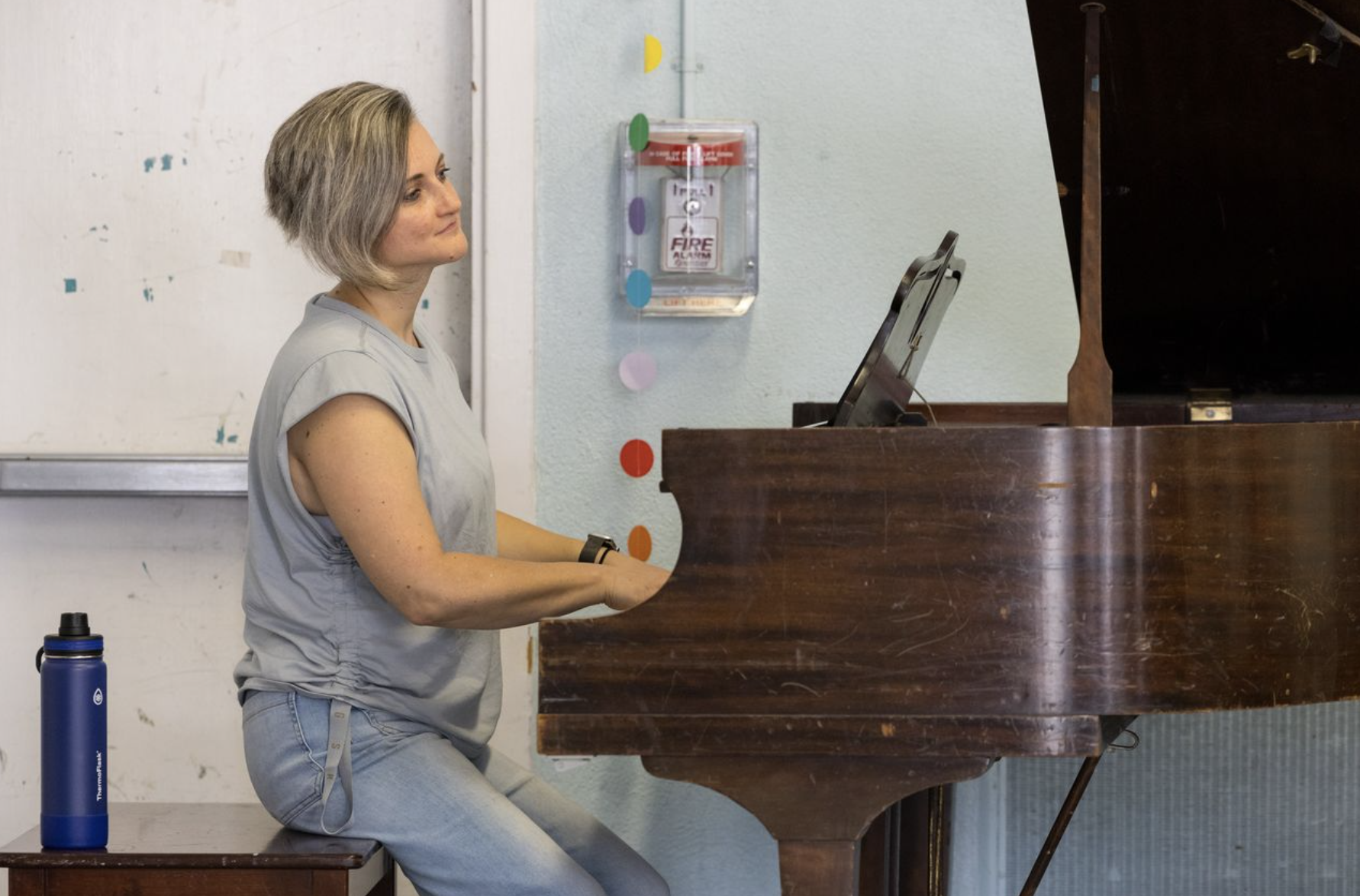
Every month, we like to spotlight one of our incredible Elemental Music teachers. Some of them have been teaching with us for close to a decade while others might be in their first year of working for our organization, but there is one thing that all of our teachers have in common: their dedication to the young musicians in our programs.
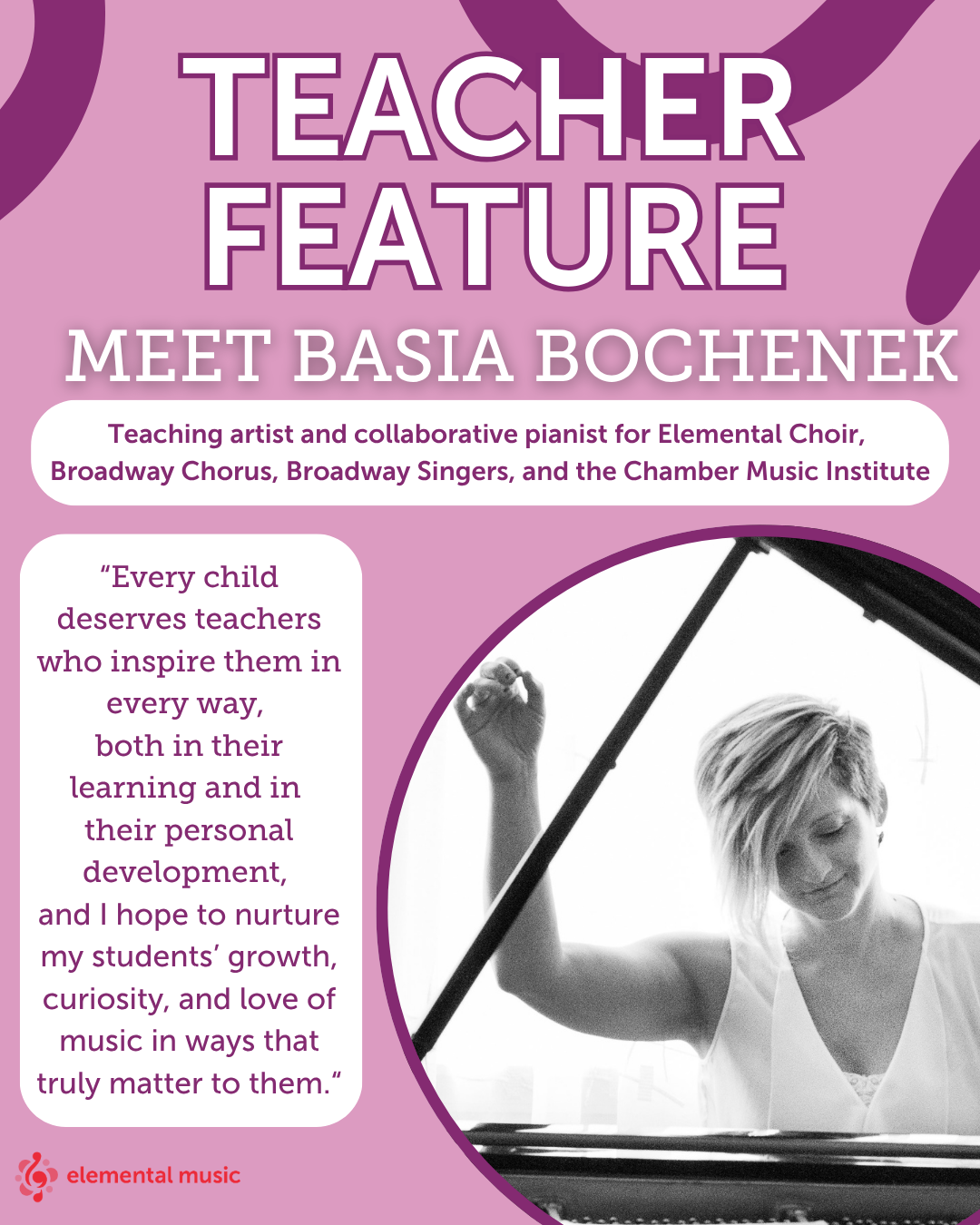
This month, we are featuring Basia Bochenek who is our teaching artist and collaborative pianist for multiple ensembles! Basia first started teaching with us in 2022 and now she is a key figure in Elemental Music, working across multiple ensembles and programs. We are incredibly excited for you to get to know Basia and learn about her approach to music education!
Elemental Music: How long have you been teaching for Elemental Music? Can you tell us a little bit about your history with the organization?
Basia Bochenek: I’ve been part of Elemental since 2022. I am a collaborative pianist and coach for Elemental Choir as well as Broadway Choir. I also started coaching for the Chamber Music Institute last year.
EM: How did you get started in music?
BB: Growing up in Poland, my kindergarten teacher recognized my musical ability when I sang and encouraged me to audition for a music school. I was accepted into the J. Paderewski Music School and began taking piano lessons at the age of five. From then on, music became an integral part of my education.
EM: What inspired you to teach in addition to performing?
BB: I have been fortunate to study with wonderful and supportive piano teachers who have shaped my education and encouraged me to become a more curious and thoughtful person. Every child deserves teachers who inspire them in every way, both in their learning and in their personal development, and I hope to nurture my students’ growth, curiosity, and love of music in ways that truly matter to them.
EM: Do you have a favorite warm-up or exercise you swear by in your lessons?
BB: One of my favorite warm-up techniques I like to use is asking pianists to sing the note names of the melody while playing the harmony with the other hand. This exercise is highly effective because it builds stronger ear-to-hand coordination and ensures the student isn't just relying on muscle memory. By vocalizing the letters, the pianist is forced to consciously identify each pitch, which deepens their understanding of the score. Additionally, this technique helps decouple the hands, improving rhythmic independence and allowing the melody to sing with a more natural, lyrical phrasing.
EM: If you could give our students one piece of advice, musical or otherwise, what would it be?
BB: Always go one step further! Music shapes our brains in ways no other subject can. Although the process can be challenging and sometimes mentally and physically exhausting, I always encourage students to keep exploring new ways of learning and practicing, and pushing themselves to play to the best of their ability everyday.